Four prayer traditions
Choose Ashkenaz, Sefard, Edot HaMizrach or Chabad. Guest settings also remember your preferred nusach on the device.
Choose your tradition and find the prayer you need. Daily services, blessings and special prayers share one clear, pointed Hebrew reading experience, with the context of the Jewish calendar built in.
Ashkenaz, Sefard, Edot HaMizrach and Chabad. The Siddur also opens without an account.
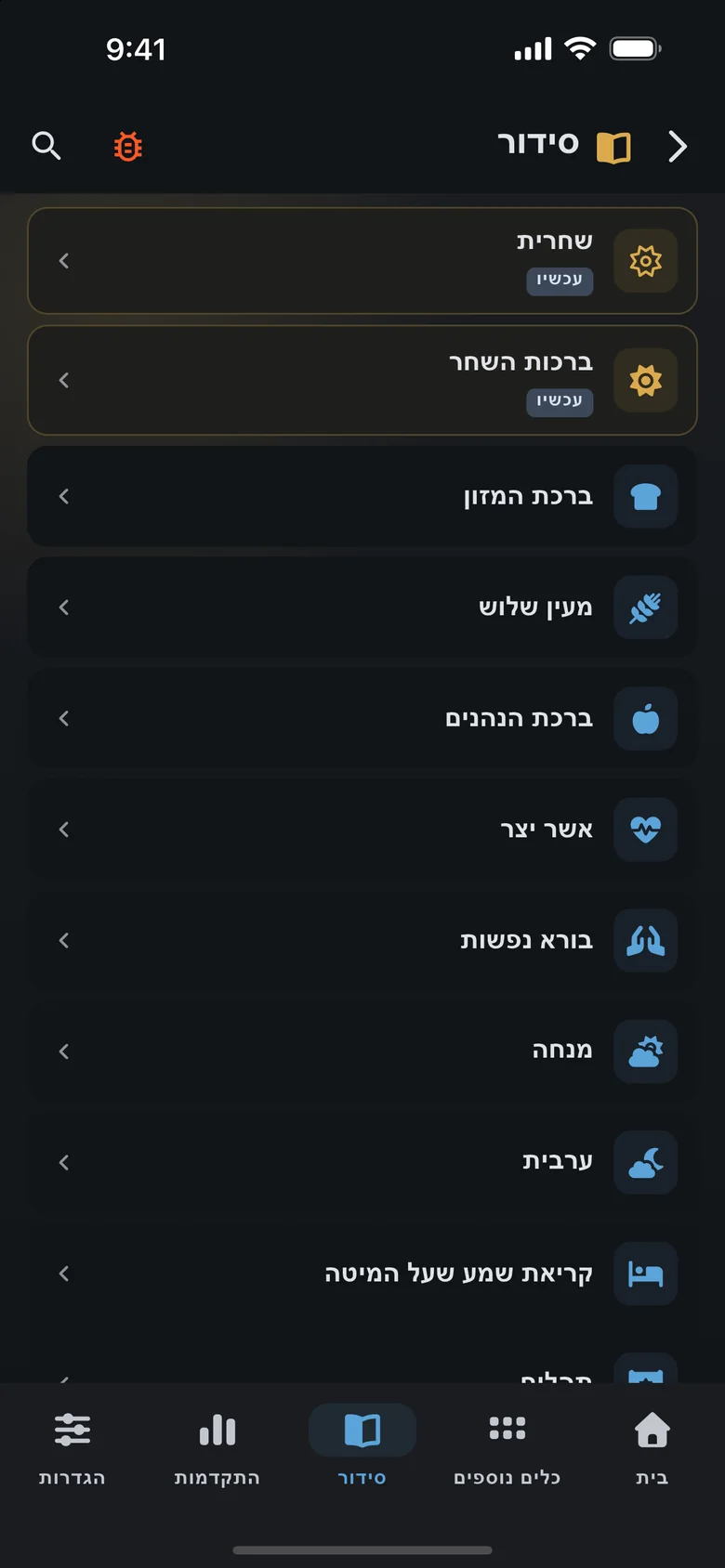
The words of a service depend on tradition, season and occasion. Start by choosing your nusach and checking the prayer location and Israel or Diaspora calendar. Then browse a category or search for a prayer by name. The reader keeps prayer text and instructions distinct, so you can follow the service without losing your place in a crowded list.
Choose Ashkenaz, Sefard, Edot HaMizrach or Chabad. Guest settings also remember your preferred nusach on the device.
Prayer categories are ordered with the time of day in mind. Search by name when you already know what you need.
Prayer content uses the date and your Israel or Diaspora settings. Relevant additions appear within the reading flow.
Find blessings, bedtime Shema, Tikkun HaKlali and Tefillat HaDerech alongside Shacharit, Mincha and Maariv, with seasonal tools such as Sefirat HaOmer.
Get familiar with the three choices that shape your reading.
Choose a nusach and check that the prayer location and holiday calendar match where you are praying.
Open its category or search by name. Suggested prayers help surface services relevant to the time of day.
Read the pointed text together with its instructions and additions. Where a prayer offers contextual choices, review them before continuing.
Go straight to the service when a printed Siddur is not close at hand.
Check location and holiday settings while keeping your familiar prayer tradition.
Use search or the categories to find the complete text and its instructions.
No. You can open it as a guest and choose a nusach in guest settings. Some wider personal preferences are available through an account.
No. Interface language and nusach are separate settings. Prayer texts remain in Hebrew; nusach determines the prayer tradition.
The Siddur uses the date, location and holiday-calendar settings to determine the relevant context. Check these settings when traveling, especially between Israel and the Diaspora.
Yes. The catalogue includes Tefillat HaDerech, Tikkun HaKlali, bedtime Shema, Selichot, Kiddush Levanah and blessings. Sefirat HaOmer appears during its season.

Download free on iOS or Android — open Tikkun Korim, your Siddur or today’s aliyah in seconds.